
So this is what it looks like …
So first there’s all this stuff on paper, and going over it is kind of fun. Everything is theoretical, contingent. No real commitment. When it comes to the house, you could build it as shown in the drawings, move things around and build something completely different, or not build it at all.
But at some point, of course, you have to do something. For us, that moment came back in August when the foundation was put in. Shortly after, Nora and I were on site, and while we noted a few things we might have done differently, there was no turning back. But a foundation by itself doesn’t tell you much. It sits mutely on the ground, a two-dimensional outline, architectural Cliff notes.
Think of all the historical ruins you’ve visited over the years – piles of mossy rock or rotted timber organized loosely into a pattern that you’re told was once a house – here’s the kitchen, over there is where they stored the grain. Of course in those cases the structures are accompanied by artist renderings, text, and maybe an audio tour to make sense of if all, but what you see in front of you is still just a crumbling wall.
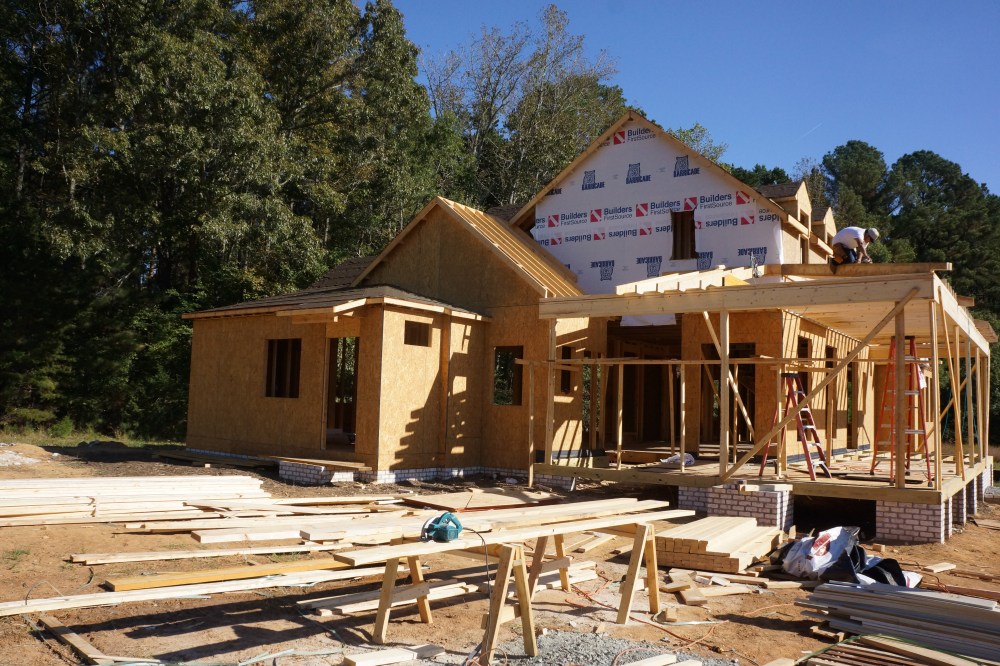
This past Saturday, we made our second site visit since we broke ground, a one-day whirlwind of trips to a stone vendor to pick materials for the chimney and the front retaining wall, a walking tour through the house to review the electrical plan, and a visit to Rodney’s office to go over the case work design for the kitchen, pantry and laundry mud room. These episodic visits create a kind of time-lapse effect — things seem to spring out fully formed. In this case the foundation had given rise to something that looked a lot like a house, apparently overnight. There were walls and a roof. The porch was being framed in.
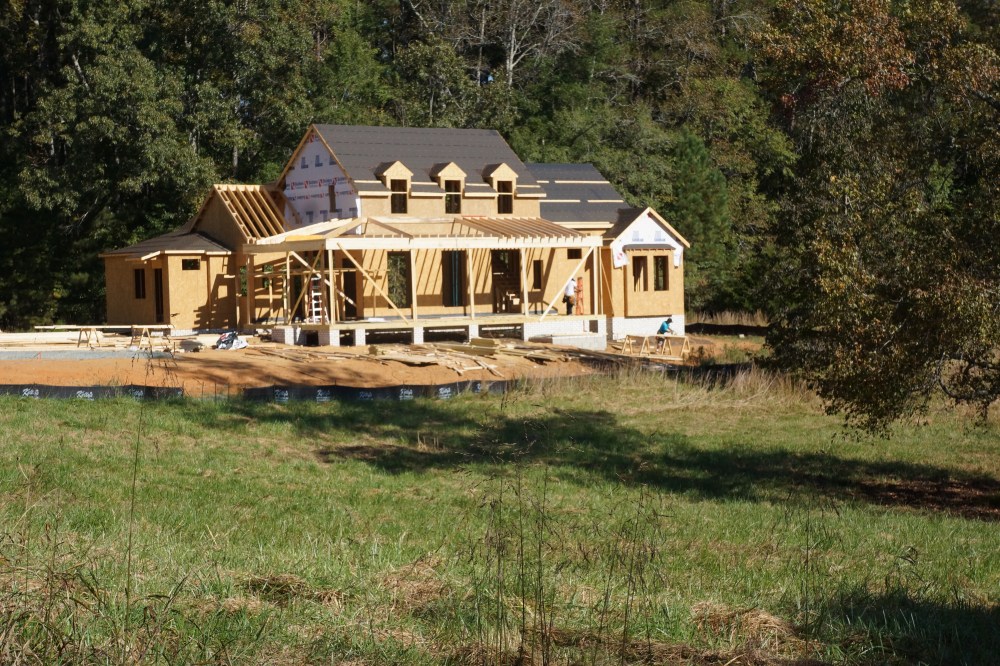 In the site plan, the house generally appeared like a tiny structure lost in a big field, and we constantly worried that we had the scale all wrong. Coming around the turn this time, Nora and I had the same thought: it looks way bigger than we remembered. The driveway, which had seemed to occupy so much space, looked like a regular driveway, nicely slotted in next to the house. The house itself was very much there.
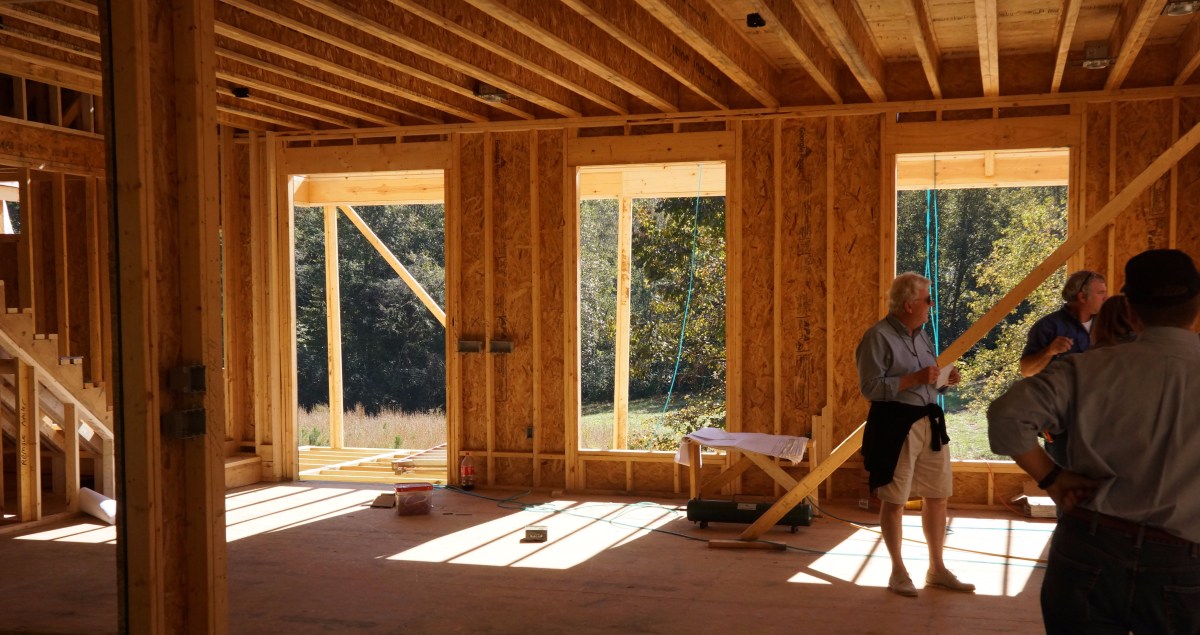
We parked and went inside, up two unfinished brick steps into the the future mudroom. The carpenters were hard at work even though it was a Saturday. Nail guns were banging and sawdust flying. The walls were framed in so you could begin to get some sense of the size of the rooms. In general, they’re not big and will shrink further when the sheetrock goes up. But what we both loved was the sight-lines, the sense of space created by the 10-foot ceilings on the main floor, and the windows looking out over the field.
The rest of the day was spent on details — fine tuning the location of lights and light switches and outlets, figuring out how we would access the crawl spaces under the upstairs eaves — necessary but not all that exciting. And then we were off.
 500 miles
Oh yeah … looking good!
LikeLike